
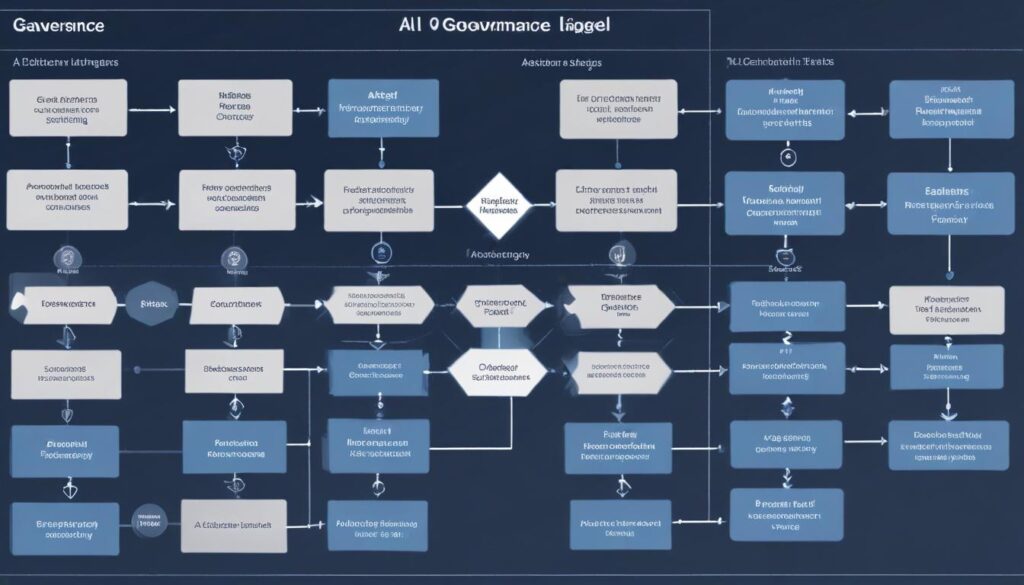
As enterprises increasingly adopt AI solutions, uncontrolled model proliferation and regulatory exposure have become critical challenges. This article provides a comprehensive blueprint to establish a structured AI governance lifecycle, ensuring models are developed, deployed, and monitored responsibly. By addressing pain points like model drift, compliance gaps, and operational inefficiencies, organizations can align AI initiatives with business goals while mitigating risks.
- Define clear objectives for AI governance to align with regulatory requirements and business ethics.
- Implement a systematic inventory and cataloguing process to track all AI models and their dependencies.
- Adopt risk scoring mechanisms to prioritize governance efforts based on potential impact and vulnerability.
- Integrate policy enforcement tools into CI/CD pipelines to automate compliance checks during model promotion.
- Leverage explainability tools like SHAP and LIME to ensure transparency in model decision-making.
Architectural Components for AI Governance
A robust governance framework requires specialized architectural components. A metadata service centralizes model data for seamless tracking, while a policy engine enforces rules at every lifecycle stage. CI/CD guardrails prevent non-compliant model deployments, and observability stacks (e.g., Prometheus, Grafana) monitor performance metrics in real time. Explainability integration ensures audits can validate model behavior against predefined policies.
- Metadata service for centralized model data management
- Policy engine with customizable rule sets for compliance
- CI/CD guardrails to block non-compliant model versions
- Observability tools for real-time performance monitoring
- Explainability frameworks to Support audit trails
Real-World Case Study: Fintech Credit-Scoring Transformation
A fintech company reduced policy violations by 92% and saved $250 monthly by migrating its credit-scoring pipeline to a governed workflow. The case study highlights how systematic inventory, risk scoring, and audit trails enabled proactive management of model drift. By implementing a policy DSL and CI/CD gatekeepers, the organization achieved both compliance and cost savings, demonstrating the tangible benefits of a mature AI governance lifecycle.