
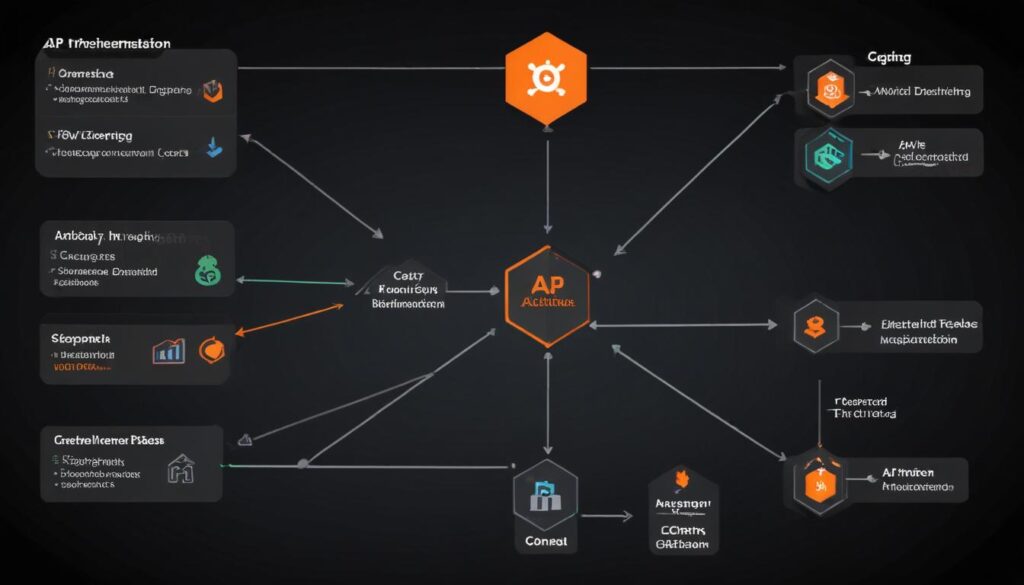
Static quotas in AI APIs lead to over-provisioning or frequent throttling, wasting budget and degrading user experience. Adaptive rate limiting with context-aware cost modeling solves this by adjusting quotas in real time based on business value, latency, error rate, and downstream load. This approach aligns traffic control with cost efficiency and SLA guarantees, ensuring premium users receive high quota while low-value or bursty traffic is shaped intelligently.
- Instrument API gateways (Kong, Envoy) to capture request metadata including user tier, model complexity, and response latency.
- Implement a token-bucket algorithm enhanced with contextual signals to compute dynamic cost per request and adjust refill rates.
- Expose rich metrics via Prometheus: requests per second, exceed count, latency distribution, and cost per request for fine-grained observability.
- Define alerting rules and SLA thresholds in Grafana to trigger automated quota adjustments and notify on cost overruns or performance degradation.
Architecture and Integration Points
Design a layered architecture with instrumentation, decision, and enforcement layers. Instrumentation collects telemetry; the decision layer runs cost modeling and adaptive rate-limiting logic; enforcement applies quotas at the API gateway. Integration points with Kong or Envoy enable middleware that reads context, updates quotas dynamically, and logs decisions for audit and abuse prevention. Diagrams should show data flow from edge to cost engine and back to gateway policy updates.
Code Implementation for Middleware and Dynamic Quotas
Provide concrete examples in Go and Python to build middleware that evaluates context signals and adjusts token-bucket parameters on the fly. In Go, leverage http.Handler and atomic counters for high-throughput path; in Python, use async hooks for rapid prototyping. Snippets should cover quota update APIs, context extraction, and safe concurrency patterns to ensure correctness under load.
Monitoring, Security, and Testing
- Security: validate client-provided quotas, enforce caps server-side, and implement abuse prevention via IP/user fingerprinting and request logging.
- Testing: write unit tests for cost functions, inject chaos to validate fallback behaviors, and run load tests with Locust to verify throughput and latency under spike conditions.
- Monitoring: visualize request cost, SLA compliance, and throttling trends in Grafana; configure alerts for exceed thresholds and cost anomalies.
- Checklist: include intro with problem statement, architecture diagrams, code blocks with comments, benchmark methodology, monitoring setup, and publishing details such as SEO keywords, visual assets, and a concise FAQ.