
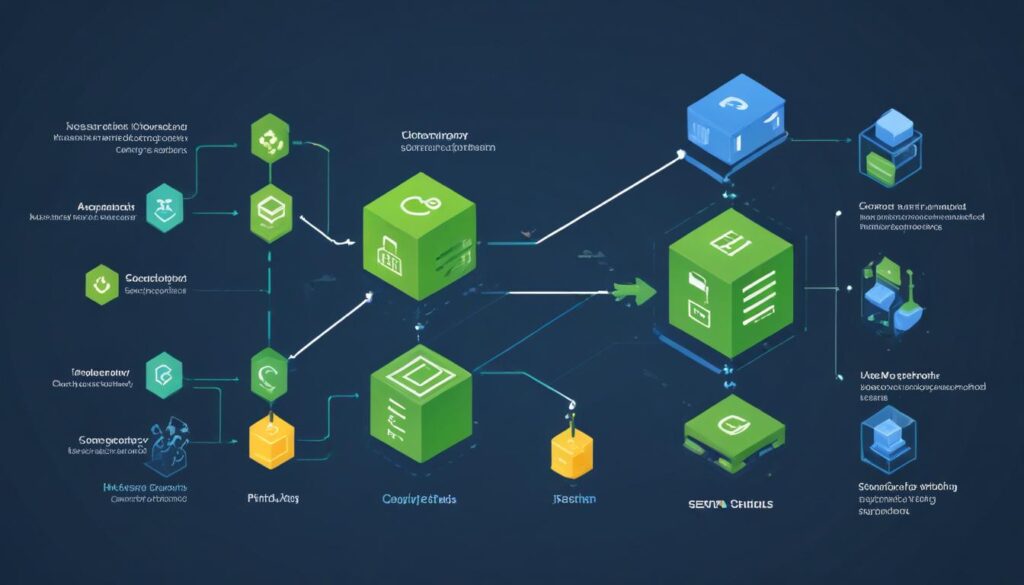
Introduction to Zero-Downtime Environment Variable Updates
Managing environment variables in production systems is crucial for maintaining application stability and performance. However, updating these variables without causing downtime presents significant challenges. In this guide, we explore strategies and best practices to ensure seamless updates that do not disrupt service availability.
Challenges in Managing Environment Variables
- Configuration drift between development, staging, and production environments.
- Inconsistent environments leading to unpredictable application behavior.
- Risk of downtime during variable updates, affecting user experience and business operations.
Strategies for Zero-Downtime Updates
- Feature flags: Isolate variable changes behind feature flags to enable gradual rollouts.
- Canary deployments: Roll out updates to a small subset of users first to monitor for issues.
- Gradual rollouts: Incrementally apply changes to the entire system to minimize risk.
Implementing zero-downtime updates involves leveraging tools like Zod for schema validation and integrating CI/CD pipelines to automate checks. Zod ensures that variable changes conform to expected types and formats before deployment. CI/CD pipelines can include automated tests to validate that updates do not introduce errors, providing an additional layer of safety.
Key Metrics to Monitor
- Update success rate: The percentage of updates that are applied without errors.
- Time to detect configuration issues: How quickly problems are identified and addressed.
- System uptime: Ensuring that the system remains available during and after updates.
Real-world case studies from high-availability systems highlight the effectiveness of these strategies. For example, a major e-commerce platform achieved 99.99% uptime during environment variable updates by implementing canary deployments and automated rollback mechanisms. Similarly, a financial services company reduced configuration issues by 70% through rigorous validation and gradual rollouts.
Checklist for Implementing Zero-Downtime Updates
- Validate environment variables using schema tools like Zod.
- Implement feature flags to isolate variable changes.
- Use canary deployments to test updates on a small subset of users.
- Integrate automated tests in CI/CD pipelines to catch issues early.
- Monitor key metrics post-deployment to ensure system stability.