
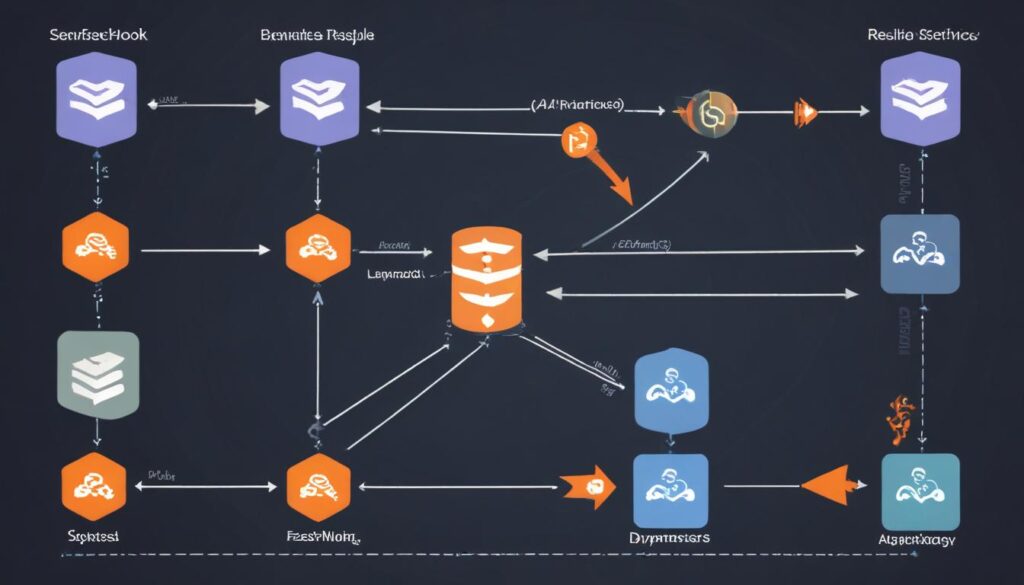
Modern distributed systems rely heavily on webhooks for real-time integration between services, yet developers frequently face challenges when debugging webhook payloads, reproducing failures, and ensuring reliable delivery. A serverless webhook capture and replay service solves these problems by providing a dedicated infrastructure for inspecting incoming HTTP requests, storing their complete metadata, and enabling safe, repeatable playback to downstream environments without requiring external debugging tools or complex local setups. This article presents a comprehensive guide for engineers and technical writers to design, implement, and operate a robust webhook debugging platform using FastAPI and AWS Lambda, emphasizing production-ready practices around security, cost, and observability. The solution eliminates dependency on third-party services while giving teams full control over their webhook lifecycle, from initial capture through analysis to replay in staging or development contexts.
- Problem overview: Understanding the need for reliable webhook inspection and replay capabilities in modern development workflows
- Architecture design: Leveraging FastAPI for request handling, API Gateway for catch-all routing, Lambda for stateless execution, DynamoDB for persistent storage with TTL, and optional S3 for long-term payload archival
- Core implementation: Building endpoint creation APIs, capturing full request metadata including method, headers, body, source IP, and timestamps, and developing secure replay functionality that automatically strips unsafe headers
- Security practices: Implementing request validation, HMAC signature verification, IAM least-privilege policies, rate limiting mechanisms, and encryption at rest for stored payloads
Cost Optimization and Resource Management
Operating a serverless webhook service at scale requires careful attention to cost efficiency without sacrificing reliability or performance. By utilizing DynamoDB on-demand capacity for unpredictable traffic patterns while analyzing usage trends to potentially switch to provisioned throughput for steady-state loads, teams can optimize spending based on actual demand. Lambda cold-start mitigation strategies such as provisioned concurrency for frequently accessed endpoints and optimized runtime configurations help maintain consistent response times while controlling compute costs. Implementing granular monitoring of cost metrics per captured webhook, including invocation counts, duration, and data transfer, enables data-driven decisions about architectural adjustments. These practices ensure that the solution remains economically viable even as webhook volume grows, making it suitable for both small projects and enterprise deployments where budget predictability is essential.
Observability and Monitoring Implementation
Comprehensive observability transforms a basic webhook capture tool into a production-grade platform that supports proactive issue detection and rapid troubleshooting. Integrating OpenTelemetry across the FastAPI application and Lambda functions provides distributed tracing that captures request lifecypan including entry point, processing duration, and downstream interactions. Configuring CloudWatch metrics to track key indicators such as requests captured per minute, successful replay counts, average latency, and error rates creates actionable visibility into system health. Setting up alerting thresholds for anomaly detection—like sudden spikes in error rates or unusually high replay latencies—enables operations teams to respond before issues impact downstream services. This monitoring layer also supports capacity planning by revealing usage patterns and helping teams right-size their infrastructure investments over time.
Deployment Workflow and Testing Strategy
Establishing a robust deployment pipeline ensures that changes to the webhook capture and replay service are delivered reliably and with minimal risk. Using Infrastructure as Code tools like AWS SAM or Cloud Development Kit (CDK) allows teams to define consistent environments across development, staging, and production while enabling version-controlled infrastructure updates. Implementing a CI/CD pipeline with automated testing validates endpoint creation logic, verifies replay correctness by comparing original and replayed request characteristics, and ensures security controls function as intended. Incorporating local FastAPI test clients for rapid development iteration, integration tests using LocalStack to simulate AWS services without incurring costs, and load testing with k6 to validate throughput and latency under spike conditions creates a comprehensive quality gate. This approach reduces manual verification efforts and accelerates safe delivery of new features.
- Real-world use cases: Capturing Stripe payment events, GitHub repository activities, and Slack messaging events to reproduce failures locally and accelerate debugging
- Success metrics: Measuring number of replayed requests, mean time to failure detection reduction, cost per 1,000 captured webhooks, and adoption rate across development teams as indicators of platform value
- Author checklist: Including clear problem statements, architecture diagrams with data flow, annotated code snippets for each component, comparative cost tables, security validation checklists, monitoring configuration guides, FAQ sections addressing common challenges, and strategically placed SEO keywords