
Introduction to Model Context Protocol on Edge Devices
Model Context Protocol rethinks how local large language models consume external context by standardizing secure capability negotiation instead of brittle function calling. Unlike conventional REST or JSON RPC surfaces that expose coarse endpoints and leak schema details to every client, MCP establishes scoped resource contracts and tool manifests negotiated at session start. Motivation centers on edge constraints: intermittent connectivity, strict privacy boundaries, and heterogeneous compute footprints that demand multiplexed, low-latency context injection without cloud dependencies. Distinctions from standard function APIs include deterministic capability discovery, transport-agnostic framing over stdio or streams, and declarative resource templates that enable safe sharing of vaults, databases, and CLI utilities across multiple local LLMs while isolating privilege per session.
Architecture of a Multiplexed MCP Gateway for Edge Privacy
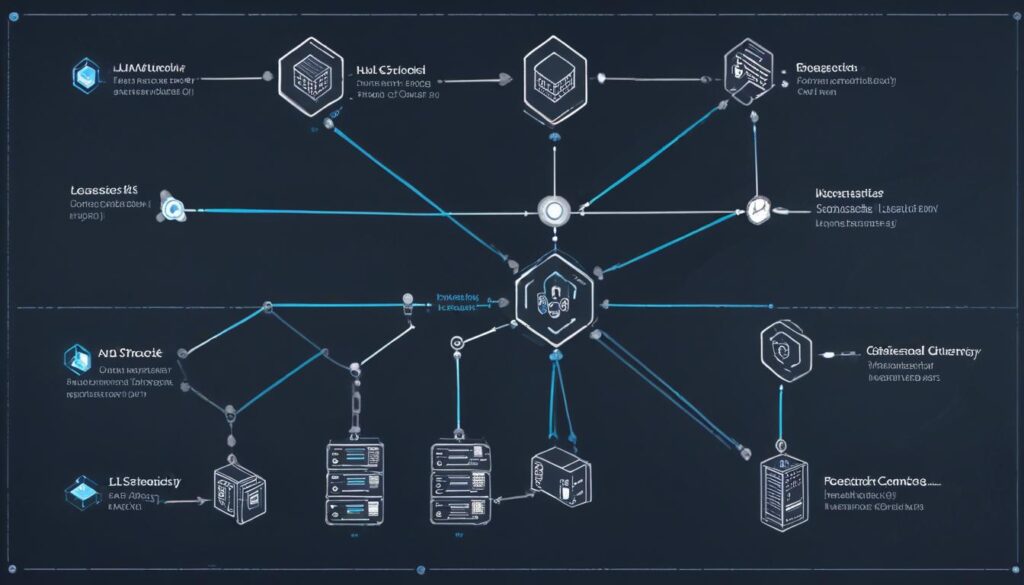
A production-grade edge gateway exposes a single ingress to multiple local LLMs and services while preserving data residency and minimizing attack surface. At its core sits a session manager that brokers connections between clients and isolated MCP servers, each running in constrained namespaces with enforced resource ceilings. Multiplexing is achieved by mapping distinct session IDs to dedicated stdio transports or secure WebSockets carrying JSON-RPC frames, with capability descriptors cached locally to accelerate renegotiation. Resource virtualization layers translate MCP resource reads into efficient local calls such as SQLite scans or file system globs, while a policy engine enforces path scoping, time-boxed credentials, and mandatory attestation checks before any tool invocation. Observability taps each leg via OpenTelemetry spans that capture setup latency, bytes exchanged, and error classification, enabling real-time telemetry without breaking privacy boundaries.
- Session multiplexing isolates per-LLM context and tool access
- Resource virtualization translates MCP reads into local store queries
- Policy engine enforces least privilege and attestation gates
- OpenTelemetry provides end-to-end spans and metrics without data leakage
Step-by-Step Implementation with the TypeScript SDK
Begin by initializing an MCP server package and selecting stdio transport for deterministic latency or WebSocket transport for browser-based clients. Use the official TypeScript SDK to declare servers with typed tool and resource schemas, employing Zod validation to enforce strict input shapes and prevent schema drift at runtime. Implement stdio transport handling by wrapping process stdin and stdout with framing that respects MCP message boundaries and backpressure, ensuring clean shutdown and restart semantics under watchdog supervision. Secure path scoping is applied by resolving all requested URIs against an allowlist root and stripping parent traversals, while capability negotiation filters exposed tools per session based on signed claims or hardware-backed attestations. Include graceful degradation strategies such as fallback resource templates and timeout-limited tool execution to maintain responsiveness under edge load spikes.
- Initialize server with typed schemas and Zod validation
- Wrap stdio with framing and backpressure management
- Scope paths to allowlisted roots and block traversals
- Negotiate capabilities per session using signed claims
Security Best Practices from Hardware to Filesystem
Secure multiplexing on edge devices begins with mutual TLS to authenticate both clients and servers, pinning certificates to TPM or secure enclave roots to defeat substitution attacks. Hardware root of trust attestation ensures that only unmodified firmware and authorized server binaries participate in sessions, with measured boot hashes included in session metadata for continuous verification. Apply least privilege file system exposure by granting read-only or scoped read-write handles to specific directories, employing Linux namespaces or container runtimes to isolate IO and prevent lateral movement. Rotate short-lived tokens and encrypt secrets at rest using envelope encryption tied to hardware keys, and enforce audit logging with tamper-evident append-only logs that record capability grants, resource accesses, and tool invocations for forensic review.
- Mutual TLS with TPM pinned certificates for client and server
- Hardware attestation tying session admission to measured boot state
- Least privilege filesystem handles via namespaces and scoped mounts
- Envelope encryption and tamper-evident audit trails for compliance
Real-World Use Cases and Prompt Engineering Templates
Obsidian vault indexing demonstrates how an MCP server can expose notes and backlinks as resources, enabling local LLMs to retrieve context without exporting raw markdown. A local PostgreSQL query tool wraps safe read-only SQL execution behind MCP tools with parameterized inputs validated by Zod, returning tabular results that models can iterate over without persisting credentials. CLI search utilities unify grep-like capabilities over local document sets, with prompt templates guiding models to construct bounded queries, parse paginated outputs, and respect rate limits. Prompt engineering patterns include few-shot examples that teach models to request only necessary resources, compose multi-step tool chains, and surface uncertainty when matches are ambiguous, all while preserving privacy by keeping data and weights on the edge device.
- Obsidian vault indexing exposes notes and backlinks securely
- Local PostgreSQL read-only queries with Zod-validated parameters
- CLI search utilities with bounded grep and pagination control
- Few-shot prompt templates that reduce token use and preserve privacy
Instrumentation and Observability with OpenTelemetry
Embed OpenTelemetry SDKs in each MCP server to emit spans that capture setup latency, negotiation round trips, and tool execution phases, correlating them by session ID without leaking sensitive payloads. Export metrics such as concurrent connections, error rates, and bundle size deltas to local Prometheus or OTLP collectors, setting alerts on latency percentiles and resource exhaustion. Use semantic conventions to label spans by capability type and transport mode, enabling dashboards that reveal hotspots in stdio framing versus WebSocket dispatch. Include sampling strategies that prioritize error traces and cold-start sessions while suppressing high-volume success spans to minimize overhead on constrained edge nodes.
- Session-correlated spans for setup, negotiation, and execution
- Metrics for latency percentiles, error rate, and concurrent connections
- Semantic labels for capability type and transport mode
- Sampling focused on errors and cold starts to reduce edge overhead
Performance Benchmarks and Cost Analysis
Measure latency percentiles from session initiation to first token across diverse edge hardware, separating transport framing costs from model inference and tool execution. Track memory footprint per server instance and total bundle size including dependencies, validating that multiprocess isolation does not inflate resident set size beyond edge constraints. Analyze token consumption savings by comparing cloud API calls that ship large contexts versus local retrieval via MCP resources, quantifying reductions in network egress and inference spend. Use microbenchmarks for stdio versus WebSocket throughput, documenting tradeoffs in head-of-line blocking and TLS handshake reuse to guide deployment topology choices.
- Latency percentiles from session start to first token
- Memory footprint and bundle size per isolated server
- Token savings and network egress reduction versus cloud APIs
- Microbenchmarks of stdio versus WebSocket throughput and TLS reuse
Deployment Checklist for CI/CD and Secret Management
Integrate TypeScript builds and type checks into CI pipelines with automated testing of Zod schemas and OpenTelemetry export validation. Containerize each MCP server with distroless or minimal base images, pinning dependency versions and scanning for vulnerabilities before promotion to edge registries. Employ Vault or cloud KMS integrated with TPM-sealed storage for secret injection at runtime, avoiding hardcoded credentials in images or environment variables. Automate canary rollouts and rollbacks based on latency and error rate thresholds, and enforce policy gates that verify hardware attestation and mTLS certificates prior to admission to production edge fleets.
- CI with type checks, Zod validation tests, and OTel export checks
- Distroless containers with pinned dependencies and vuln scans
- Vault or KMS for runtime secret injection tied to TPM seals
- Canary rollouts gated by latency, errors, and attestation verification
Evaluating Success and Planning Future Extensions
Define success metrics that include user adoption rates of local LLM workflows, percentage reduction in API latency for context retrieval, and measurable drops in security incidents or policy violations post-deployment. Continuously compare baseline telemetry against these targets and adjust resource scoping or concurrency limits accordingly. Extend stateful servers that maintain session memory across tool calls without leaking state between sessions, and enable secure cross-client tool sharing through capability delegation tokens with bounded lifetimes. Explore policy-driven auto-scaling of isolated server pools on edge nodes and lightweight federation protocols that let nearby devices share specialized tools under mutual attestation.
- User adoption of local workflows and satisfaction scores
- API latency reduction and memory footprint targets
- Security incident and policy violation reduction
- Stateful session memory and cross-client tool sharing with delegation tokens
Publishing Recommendations and Call to Action
Optimize SEO with focused keywords such as MCP, Edge AI, Local LLM, Model Context Protocol, and TypeScript SDK, and reinforce topical authority with clear headings, concise definitions, and reproducible code snippets. Assemble a visual assets checklist that includes architecture diagrams of multiplexed gateways, sequence charts for stdio and WebSocket flows, and annotated screenshots of Obsidian and CLI use cases. Provide downloadable starter kits and sample prompts so readers can replicate benchmarks on their edge hardware. Close with a call to action that encourages experimentation by spinning up a minimal MCP server today, measuring latency and memory impact, and sharing results to advance community-driven standards for secure, private edge AI.
- Target keywords and structured headings for SEO clarity
- Architecture diagrams and flow charts for multiplexing gateways
- Annotated screenshots for Obsidian vault and CLI search use cases
- Downloadable starter kits and sample prompts for rapid experimentation