
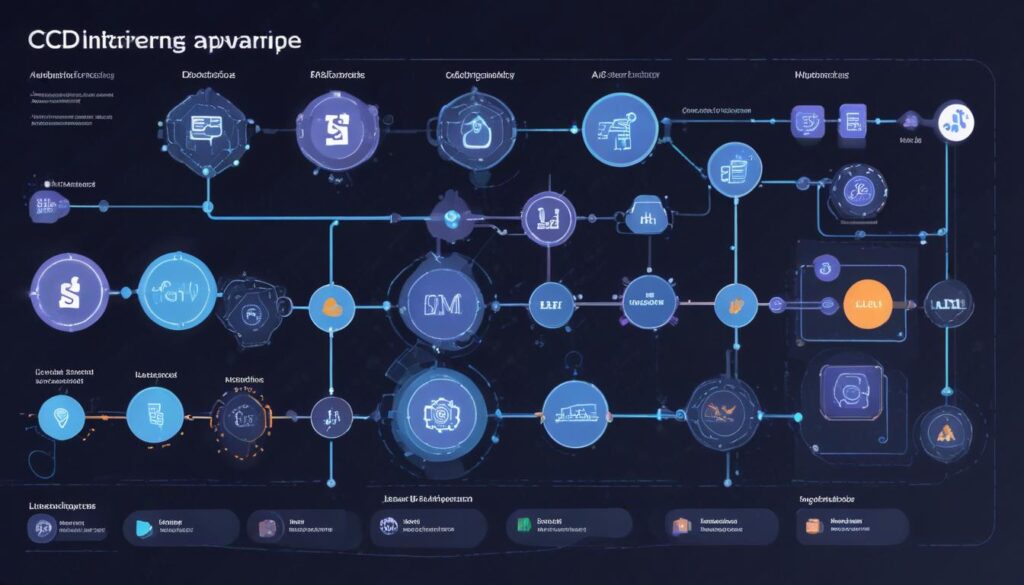
The integration of AI assistants into CI/CD pipelines offers transformative potential for developers by automating code generation, testing, and deployment. However, without proper monitoring and metrics, these integrations can introduce flaky builds, hidden latency, and security vulnerabilities. This guide provides a comprehensive approach to leveraging DevOps metrics and observability to optimize AI-driven workflows, ensuring reliability, cost efficiency, and security.
- Build time optimization through AI-assisted parallel testing
- Reduction of token usage costs via model quantization
- Improved reliability via anomaly detection in test flakiness
- Proactive resource scaling based on real-time CPU/GPU metrics
- Security threat detection through audit logging of generated code
Metrics Infrastructure Setup
Implementing robust instrumentation requires integrating OpenTelemetry for distributed tracing and Prometheus exporters for metric collection. GitHub Actions annotations and similar tools can tag AI-specific spans, enabling granular analysis of model inference times, token consumption, and latency patterns across pipeline stages.
- Track inference latency percentiles using distributed tracing
- Monitor token costs at the pipeline run level
- Measure test pass/fail rates post-AI-generated fixes
- Capture resource consumption spikes during model calls
- Log security incidents via audit trails
Designing AI-augmented pipelines involves strategic placement of model interactions. For instance, pre-commit hooks can trigger local LLMs for initial code linting, while PR reviewers use hosted models for security scans. Automated merge bots should execute AI-fix suggestions through controlled unit tests, with metrics dashboards displaying success rates and cost differentials compared to manual processes.
Cost Optimization Strategies
Cost management in AI-enhanced CI/CD requires balancing performance and economics. Token caching mechanisms can reduce redundant API calls, while selective inference activates models only during critical failure points. Fallback to lightweight models for non-critical tasks, and implement metric-driven scheduling to prevent overprovisioning of compute resources.
Security remains paramount when integrating AI models. Sandboxing model calls using containerization ensures untrusted inputs don’t compromise the pipeline. Secret management tools like Vault can store API keys and model endpoints, while audit logging tracks every AI-generated code snippet for compliance audits and accountability.
Real-World Implementation Guide
The described demo pipeline involves a Python linting step that flags issues, triggering a local LLM to generate auto-fix suggestions. These fixes are automatically committed, tested, and validated. Metrics from OpenTelemetry and Prometheus feed into Grafana dashboards, allowing teams to correlate build success rates with AI intervention effectiveness and cost metrics.
Benchmarking should compare baseline CI runs without AI against augmented runs. Tools like k6 simulate load to measure latency improvements, while ROI calculations contrast time saved from automated fixes against increased infrastructure costs. Clear visualizations in dashboards help stakeholders understand the value of AI integration.
Author Checklist
- Include an architecture diagram of the AI-integrated pipeline
- Provide code snippets for GitHub Actions, GitLab CI, and Azure Pipelines
- Detail metric collection setup using OpenTelemetry
- Present a cost comparison table
- Add security implementation steps
- Compile a FAQ address common implementation challenges
- Suggest visual assets like flowcharts and dashboard screenshots
The publishing blueprint emphasizes SEO optimization with keywords like ‘AI CI/CD optimization’ and ‘DevOps metrics’. Headings should align with user search intent, and visual assets must include interactive dashboards and pipeline flow diagrams. A call-to-action encouraging readers to implement the patterns in their repositories increases engagement and real-world adoption.